

Friday, November 27, is Black Friday, and a lot of people will be in the stores or on their sites. In its annual survey, the National Retail Federation estimates that 182.7 million Americans plan to shop over the Thanksgiving weekend, and the top reason they give is “the deals being too good to pass up” (48 percent).
Today, three days before, the UK consumer group Which? published the largest check of those deals we have found. It followed more than 250,000 daily prices on 756 products at eight big retailers, for six months before Black Friday 2025 and six months after. The headline is short: only one in five deals was really the lowest price of the year.
This post is about the other four, and about how to spot them before you pay.
What 250,000 prices showed
Which? found that only 22 percent of the offers hit their lowest price during the four-week sales period, from November 14 to December 12, 2025. Another 44 percent “merely matched prices already available earlier in the year.” In the remaining third, the price during the sales was not the year’s best.
Two examples from the study show how it works:
- A 75-inch TV sold for £1,800 with a claimed recommended price of £2,699, a “saving” of £899. Which? found no evidence that it had ever been priced at £2,699 before the sale. In May 2026 it sold for £1,208.
- A 48-inch OLED TV cost £999 on Black Friday. On December 24 it cost £749, £250 less, a few weeks after the big sale.
The year before was similar. In its study of Black Friday 2024, Which? reported that 83 percent of the products on offer were cheaper or the same price at least once outside the sales period. These are British stores, not American or Latin American ones. Still, it is the largest public tracking of Black Friday prices we found, and the way it checks a deal works in any store.
The crossed-out price is the whole trick
A discount is a comparison between two numbers. Stores choose both.

In the United States, the FTC’s Guides Against Deceptive Pricing describe what a fair “was” price looks like: a price at which the product was “openly and actively offered for sale, for a reasonably substantial period of time.” They also describe the opposite case, a former price that “is not bona fide but fictitious,” set high so the seller can later announce a big reduction. In that case, the guide says, “the ‘reduced’ price is, in reality, probably just the seller’s regular price.”
The Which? study of 2024 found a clear example. An electric toothbrush was advertised as “save £35, RRP £70.” The £70 price had applied for only 3 days in the six months before the sale. The rest of the time it cost £35, the same as the “deal.”
So the useful question is not “how much does the tag say I save?” It is “how much did this cost on an ordinary Tuesday last month?”
Why $199 feels cheaper than it is
Stores have a second tool, and it works on your brain, not on the tag. In 2005, researchers Manoj Thomas and Vicki Morwitz published five experiments on what they called the left-digit effect: people judge a price ending in 9 as much smaller than one cent more, when the first digit changes. $199 reads as “one hundred and something,” and $200 reads as “two hundred.”
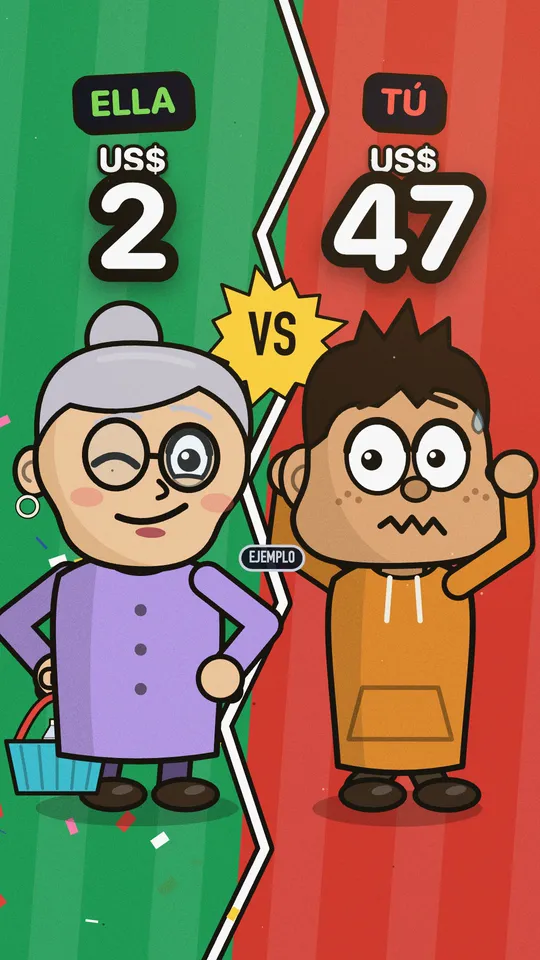
We told this story in a short about the supermarket: five tricks that make you leave with $47 when you went in for milk, and the shopper next to you who beats all of them. The prices level is the one that matters on Black Friday, when so many tags end in 99. The defense is boring: read the full number, or round it up before you decide.
The card math that erases a discount
Say the deal is real. A TV usually costs $500, and on Black Friday it costs $400. You save $100, but only if you pay $400.
Many people pay with a credit card and take months to clear it. The Federal Reserve’s latest consumer credit report puts the average rate on card accounts that paid interest at 22.36 percent a year in the third quarter of 2026. Here is the same $400 TV at that rate, depending on how much you pay each month:
| Paying | Months | Total, $ |
|---|---|---|
| Saved cash | 0 | 400.00 |
| $50 a month | 9 | 437.26 |
| $25 a month | 20 | 479.42 |
| $20 a month | 26 | 505.16 |
At $20 a month you pay $105.16 in interest, more than the $100 the deal saved you. The “discounted” TV ends up costing more than the full price. The numbers come from the same code as our debt payoff calculator, with interest charged monthly and nothing else added to the card. Our guide to credit card APR explains why small payments stretch so far, and buy now, pay later has the same problem in smaller installments.
Three checks before you pay
None of this says Black Friday is a scam. Which?’s own retail editor said “there are definitely bargains to be had,” and some stores did much better than others. The point is to know which kind of deal you are looking at.
- Check the price history, not the tag. If you already know what you want, write down or screenshot its price this week. On Friday, compare the sale price with that number, not with the crossed-out one. Some stores and price trackers show a chart of past prices; it is the fastest way to see whether “50% off” is new.
- Ask whether you would buy it on an ordinary day. A discount on something you did not plan to buy is not a saving of 30 percent. It is spending 70 percent. A short list made before the sales, with a top price for each item, does most of the work. If gifts are the reason, a sinking fund spreads that cost over the year so December does not land on the card.
- Decide how you will pay before you see the price. Money you already have keeps the discount. A balance that takes a year to clear can turn it into a loss, as the table shows.
The same rules work on Cyber Monday, November 30, and on every “last chance” email that follows it.
Where LucasApp fits
LucasApp does not tell you what to buy. It shows where your money goes: you record an expense with a photo of the receipt or a short line of text, and it shows up in your month. After the sales, that view answers the only question that matters about Black Friday, which is not how much you saved, but how much you spent.
Sources and further reading
- Which?: Only one in five deals on Black Friday at lowest price of the year (November 24, 2026)
- Which?: Most Black Friday deals the same price or cheaper at other times of the year (November 25, 2025)
- National Retail Federation: 183 million consumers expected to shop during Thanksgiving weekend (November 19, 2026)
- National Retail Federation: 2026 holiday sales forecast (October 15, 2026)
- 16 CFR 233.1, Former price comparisons (FTC Guides Against Deceptive Pricing)
- Federal Reserve: G.19 Consumer Credit (November 6, 2026)
- Thomas and Morwitz: Penny Wise and Pound Foolish, the left-digit effect in price cognition (Journal of Consumer Research, 2005)
Cover photo: Justin Lim; inline photo: Angèle Kamp, both on Unsplash, used under the Unsplash License. The animated clip and the video cover come from our own short.
Sources checked on November 24, 2026. The Which? figures cover eight British retailers. The card example is illustrative: it uses the Federal Reserve’s average rate, charges interest monthly, adds no fees or new purchases and rounds to the cent; your card’s rate and terms may differ. This is not personalised financial advice.
Frequently asked questions
Are Black Friday deals really the cheapest prices of the year?
Usually not. Which?, the UK consumer group, tracked more than 250,000 daily prices on 756 products at eight large British retailers. Only 22 percent of the Black Friday 2025 offers hit their lowest price of the year during the four-week sales period, and another 44 percent merely matched a price that had already been available earlier in the year. The study covered British stores, but the way it checks a deal works anywhere.
How can I tell if a Black Friday discount is real?
Compare the sale price with what the product actually cost in the weeks before, not with the crossed-out price on the tag. Write down or screenshot today's price of anything you plan to buy, or look at a price history if the store or a price tracker shows one. If the sale price is the same as an ordinary week, the discount is a label, not a saving.
Is a crossed-out 'was' price allowed if the item never sold at that price?
In the US, the FTC's Guides Against Deceptive Pricing say a former price should be one at which the product was openly and actively offered for a reasonably substantial period of time. When an artificial, inflated price is set only to advertise a big reduction, the guide says the reduced price is probably just the seller's regular price.
Does paying for a Black Friday deal with a credit card cancel the discount?
It can. With a card at 22.36 percent APR, the Federal Reserve's average for card accounts that paid interest in the third quarter of 2026, a $400 TV marked down from $500 and paid at $20 a month takes 26 months and costs $505.16 in total. That is more than the original $500 price. The example is simplified: monthly interest and no new purchases.
Why does $199 feel so much cheaper than $200?
Researchers Manoj Thomas and Vicki Morwitz called it the left-digit effect: when the first digit changes, people judge a price that ends in 9 as much smaller than one cent more. Reading the full price, or rounding it up before you decide, is a simple way to see it as it is.